
Learning how to prepare your teen for getting braces starts with knowing what to expect, stocking the right supplies, and involving your teen in the decision. Mahlmann & Borders Orthodontics walks families through every step so your teen feels ready, informed, and excited about the smile of their dreams. Families across Richmond trust the practice to make that first week feel easy rather than overwhelming.
What Getting Braces Actually Involves for Teens
Getting braces means bonding small brackets to your teen’s teeth, threading a thin archwire through those brackets, and securing everything with tiny elastic bands. The appointment is comfortable and takes about an hour to 90 minutes in the chair. Mild soreness usually shows up a day or two later, not during placement itself.
Here’s what a typical bonding appointment looks like:
- A gentle cleaning and drying of the teeth
- Application of a bonding agent to each tooth
- Careful placement of each bracket
- Threading of the archwire and securing with colored bands
- A quick review of care instructions before your teen heads home
The soreness that follows is your teen’s mouth adjusting to gentle pressure. It usually fades within three to five days as the teeth begin to shift your teeth in gear. Getting ready ahead of time makes a real difference. Teens who know what to expect walk in calmer, adjust faster, and return to normal routines within a week. Richmond families often tell us that a few days of planning turned appointment day into a non-event.
How to Prepare Your Teen Step by Step
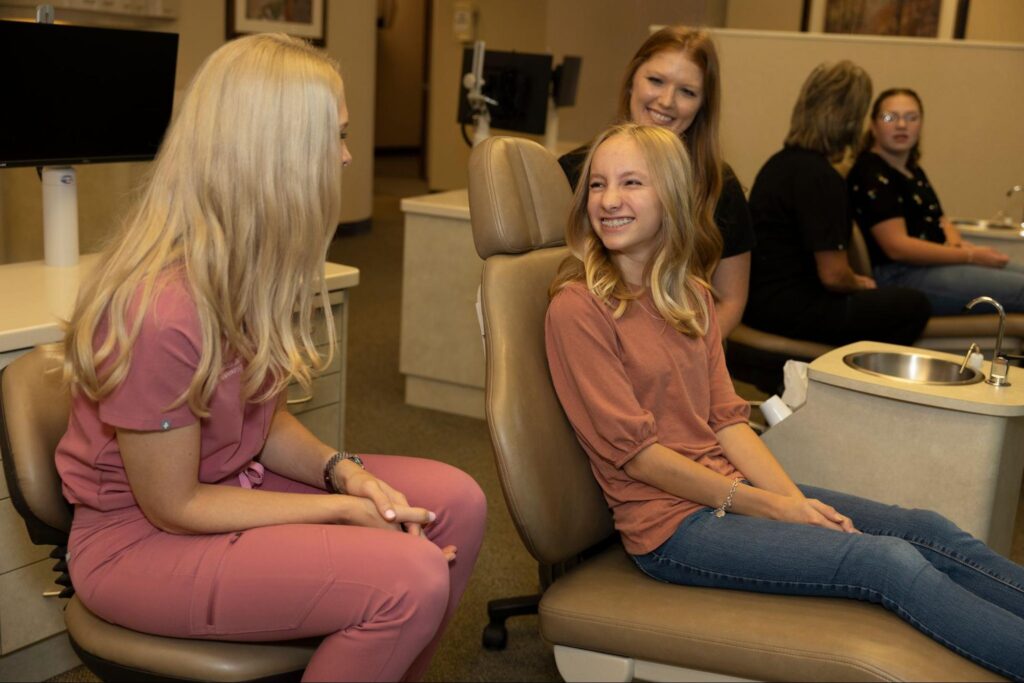
Getting your teen ready for braces takes about a week of planning. Start by involving them in the decision, walk them through what happens at the appointment, and stock your kitchen and bathroom with the supplies they’ll need. A little groundwork turns appointment day from stressful to smooth.
Follow these steps in the weeks leading up to bonding day:
- Discuss treatment options together. Bring your teen to the free consult with Dr. Mahlmann or Dr. Borders. Let them ask questions about metal braces, clear braces, and clear aligners so they feel ownership over the choice.
- Walk through the appointment ahead of time. Explain that the chair time is longer than a regular cleaning but comfortable throughout. Watching a short video together can take the mystery out of the visit.
- Stock up on soft foods. Fill the fridge and pantry with yogurt, smoothies, mashed potatoes, pasta, scrambled eggs, soup, applesauce, and pudding. Plan the first three days of meals in advance.
- Prepare a comfort kit. Have orthodontic wax, an age-appropriate over-the-counter reliever, and a soft ice pack ready before day one.
- Build a braces care kit. Include a travel toothbrush, floss threaders or a water flosser, interdental brushes, and a small mirror. Keep one at home and one in your teen’s backpack.
- Time the appointment wisely. Schedule bonding day when your teen has a lighter week ahead. Avoid big tests, sports tryouts, or performances during the first few days.
- Talk through the social side. Some teens worry about how braces will look. Remind them that most of their friends will either have braces or wish they’d gotten them sooner.
Groundwork like this gives your teen a sense of control, and that alone eases nearly every worry.
Benefits of Preparing Your Teen Ahead of Time
Families who prep together simply have a better first week. Your teen knows what’s coming, your kitchen is ready, and small surprises don’t become big meltdowns. This is exactly why learning how to prepare your teen for getting braces pays off long before the brackets ever go on.
The payoff shows up in several ways:
- Less anxiety on appointment day. Knowing the steps takes fear off the table.
- Faster adjustment to eating and speaking. Soft foods on hand means no scrambling at 8 p.m. on day one.
- Fewer emergency calls. Wax, floss threaders, and a soft toothbrush prevent most first-week issues before they start.
- Better oral hygiene from day one. Teens who start with the right tools stick with good habits.
- Stronger cooperation with rubber bands and aligners. Involved teens follow instructions because they helped choose the plan.
A teen who feels prepared walks into treatment with real confidence, and that confidence carries them all the way through to a finished smile. Richmond parents consistently notice that a well-prepped teen finishes treatment on time, smiling from ear to ear.
Metal Braces vs. Clear Braces vs. Aligners for Teens
Not every teen needs the same appliance. Mahlmann & Borders Orthodontics offers treatment options galore, so the right pick depends on your teen’s lifestyle, activities, and personality. Here’s a quick side-by-side to help you compare.
| Feature | Metal Braces | Clear Braces | Clear Aligners |
|---|---|---|---|
| Appearance | Visible metal brackets | Tooth-colored ceramic brackets | Nearly invisible trays |
| Durability | Very durable, great for sports | Slightly more fragile than metal | Removable, no bracket breakage |
| Cleaning | Requires floss threaders | Requires floss threaders + stain care | Easiest, brush teeth normally |
| Best for | Active teens, complex cases | Teens who want discretion | Disciplined teens, milder cases |
| Prep focus | Supply kit and soft foods | Supply kit plus avoiding coffee, tea, curry | Wear-time tracking, case for meals |
| Wear requirement | 24/7 (fixed) | 24/7 (fixed) | 20-22 hours per day |
Metal braces remain a favorite for teens because they’re strong, cost-effective, and let kids pick fun elastic colors at each visit. Clear braces blend in with the natural tooth color, which appeals to teens who feel self-conscious. Clear aligners suit teens who can commit to wearing trays consistently and keeping track of them at lunch and during sports.
The best way to match your teen with the right option is a free consult with Dr. Mahlmann or Dr. Borders. They’ll review the bite, discuss your teen’s daily routine, and build a customized treatment plan designed just for you.
What Affects the Cost of Teen Braces
The cost of teen braces depends on the type of appliance, the complexity of the case, the length of treatment, and your insurance coverage. Most families find that flexible payment plans keep monthly costs very manageable, and a free consult provides an exact price for your teen’s specific case.
Several factors influence the final number:
- Type of appliance. Metal braces typically cost less than clear braces or clear aligners.
- Length of treatment. Longer cases involve more adjustment visits and materials.
- Complexity of the bite. Simple crowding costs less to correct than a severe overbite or crossbite.
- Dental insurance benefits. Many plans include orthodontic coverage that offsets a portion of treatment.
- Payment plan structure. Splitting the total into monthly payments spreads the cost across the full treatment.
Mahlmann & Borders Orthodontics believes in triumph through transparency. During your free consult, you’ll receive a clear, itemized estimate, an insurance benefits review, and a walk-through of payment options so you know your full costs upfront before treatment begins.
Is Your Teen Ready for Braces?
According to guidance from the American Association of Orthodontists, most teens are ready for braces around the time most of their permanent teeth have come in . Readiness isn’t only about age, though. It’s also about maturity, hygiene habits, and willingness to follow care instructions. Richmond parents often ask us how to tell when the timing is right, and these questions help.
Ask yourself these questions:
- Have most of your teen’s baby teeth fallen out?
- Does your teen brush twice a day without constant reminders?
- Can your teen commit to avoiding hard, sticky, and chewy foods?
- Is your teen willing to wear rubber bands or aligners as prescribed?
- Does your teen show up for regular dental checkups without a fight?
Braces correct crowding, gaps, overbite, underbite, and crossbite. An orthodontic evaluation with Dr. Mahlmann or Dr. Borders confirms both the right timing and the right treatment plan for your teen’s bite. According to the American Association of Orthodontists, every child should have an orthodontic evaluation by age 7, which gives orthodontists a chance to monitor growth and step in at the ideal time.
Frequently Asked Questions About Preparing for Braces
Will my teen feel any discomfort with braces?
Placement itself is comfortable. Your teen may feel mild soreness for three to five days as the teeth begin to shift, similar to the ache after a tough workout. Salt water rinses, soft foods, and an over-the-counter reliever handle the adjustment period easily, and most teens are back to normal quickly.
What foods should my teen avoid with braces?
Skip anything hard, sticky, or chewy. That includes popcorn, ice, hard candy, caramels, gum, taffy, whole apples, bagels, and crusty bread. Cut firmer foods like carrots and pizza crust into small pieces. Stick to softer options for the first week, then slowly reintroduce normal foods.
How long do braces stay on?
Most teen cases run 18 to 24 months, though timing depends on the complexity of the bite. Dr. Mahlmann and Dr. Borders will share an estimated treatment length during your free consult based on the specific case.
What should we pack for the first day?
Bring orthodontic wax, an age-appropriate reliever, a soft travel toothbrush, floss threaders, a small mirror, and a few soft snacks like yogurt or a smoothie for the ride home. A lip balm helps too, since lips can feel a little dry after a long appointment.
How do we handle soreness after adjustments?
Warm salt water rinses (a teaspoon of salt in a cup of warm water) soothe irritation. Soft foods, cold treats like smoothies, and an over-the-counter reliever cover the rest. Soreness usually fades within a couple of days after each visit.
How often are adjustment visits?
Adjustment visits typically happen every 4 to 8 weeks. These appointments are short, usually 20 to 30 minutes, and let Dr. Mahlmann or Dr. Borders check progress, change the wire, and keep treatment on track. Ready to get your teen started? Schedule a free consult with Dr. Mahlmann or Dr. Borders, and the team will build a customized treatment plan designed just for you. We’re here to make you smile.